
Great Photographs Begin with Vision: Developing Your Photographic Eye
Ask someone how to become a better photographer, and you'll likely hear recommendations for a new camera, a sharper lens, or the latest editing software. While a quality kit is certainly helpful (check out my Leica kit recently featured on the Red Dot Forum Camera Talk), the most important piece of equipment is often overlooked. And it’s free.
Your eyes.
More specifically, your ability and willingness to see.
Taking memorable photographs has very little to do with megapixels or expensive gear. It begins with learning to recognize moments that others walk past every day. Photography is an exercise in observation, finding beauty in the unexpected.
Cameras Don't Create Vision
One of the biggest misconceptions in photography is that better equipment automatically produces better images. It doesn't. A camera captures what you place in the frame. It cannot decide what deserves your attention. It cannot recognize subtle changes in light or anticipate the way a moment will make you feel. That responsibility of deciding what to capture belongs entirely to the photographer.
I've often found that some of my best photographic discoveries happen before the camera ever leaves my bag. Sometimes I'll spend twenty or thirty minutes simply walking, looking, and observing before I take my first shot. Prints like Puff and Beach Cross were born in exactly this way.
Learn to See Light Before You See Subjects
Most people notice objects. Photographers notice light. In my blog post about seeing beyond color, you can read how light influences photography - especially when it comes to black and white photography.
The same building can appear ordinary at noon and extraordinary an hour before sunset. A weathered window (like this one in Los Alamos) becomes a work of art when light reveals decades of texture. Light changes by the minute, so you must train your eye to follow the light as it moves across landscapes and scenes. Being able to recognize subtle changes in light is one of the fastest ways to improve your photography.
When arriving at a location, resist the urge to immediately begin shooting. Instead, stop and ask yourself a few questions:
Where is the light coming from?
Is it soft or directional?
Which way is it moving? And what will happen if I wait another fifteen minutes?
Which surfaces are reflecting light?
Which areas are disappearing into shadow?
By identifying how the light is influencing the scene and environment you want to capture, it will be easier to determine what is naturally being highlighted by the light. In cases where you want to capture something specific, use the light to choose the perfect moment to capture your shot in the height of its beauty.
Slow Down
Modern technology, even in photography, encourages us to move faster and do more. Cameras capture dozens of frames in seconds, memory cards hold thousands of images, and social media rewards constant posting. It's easy to believe that making more photographs increases the chances of creating a memorable one.
In my experience, I've found the opposite to be true.
Some of my favorite photographs weren't made the moment I arrived. They emerged only after I spent time with a place—walking, observing, and waiting for something to emerge and catch my eye. Sometimes it was the light. Sometimes it was the weather (like Wyoming Snow featured in my post about the art of seeing beyond color). Sometimes it was simply a new perspective that revealed the shot after I stopped trying to force the image.
Not every beautiful scene becomes a successful photograph, and not every work of art would be considered a beautiful scene. Recognizing that is one of the most valuable lessons a photographer can learn. Patience and perspective allows us to see what hurried eyes often miss.
Simplicity Strengthens Composition
When photographers first begin composing an image, the instinct is often to include as much as possible. Over time, however, you begin to realize that great composition is rarely about adding more. It's about discovering what isn't necessary.
Every photograph contains distractions. A bright patch of sky, an extra tree branch, a signpost near the edge of the frame, or a shadow that can quietly pull the viewer's attention away from what the photographer wants viewers to focus on.
Before pressing the shutter, I often ask myself what can be removed rather than what should be included. Sometimes the answer is as simple as taking a few steps in another direction or tightening the frame. Simplifying a scene allows light, texture, and emotion to become the focus, creating photographs that feel stronger and more intentional. There’s a reason most people don’t photograph the kitchen sink. Editing matters.
Photography is an Ongoing Practice of Seeing
People often ask how long it takes to develop an artistic eye. The truth is, there isn't a point where you've finally "arrived." Learning to see is a lifelong process, and every walk with a camera offers another opportunity to discover something new. With any skill, you can improve your artistic vision with practice. True artists and masters of their craft never stop practicing and learning to improve.
The changing seasons, shifting light, and evolving perspective all reveal different stories to those willing to slow down and pay attention. Photography isn't simply about collecting beautiful images. It's about becoming more aware of the world around you and noticing details that might otherwise pass unnoticed.
The photograph begins long before the shutter is pressed, shaped by curiosity, patience, and the willingness to truly observe. The camera is merely the tool that records what your eyes have already discovered.
Collecting Photogravure Fine Art Prints
Because each print is individually created using traditional intaglio techniques, photogravures are limited edition, signed photography prints rather than mass-produced prints.
Collectors value photogravure for its exceptional tonal depth in black and white photography, a classic style for collectors. The handcrafted printing techniques use archival materials designed to last for generations, creating a collection of heirlooms to be passed down.
These qualities make photogravure prints highly desirable for collectors seeking museum-quality photography prints or heirloom artwork. If you are interested in owning one, please explore available pieces in my online photogravure print collection or schedule an in-person visit to my downtown Denver gallery.
Featured Photogravure Print
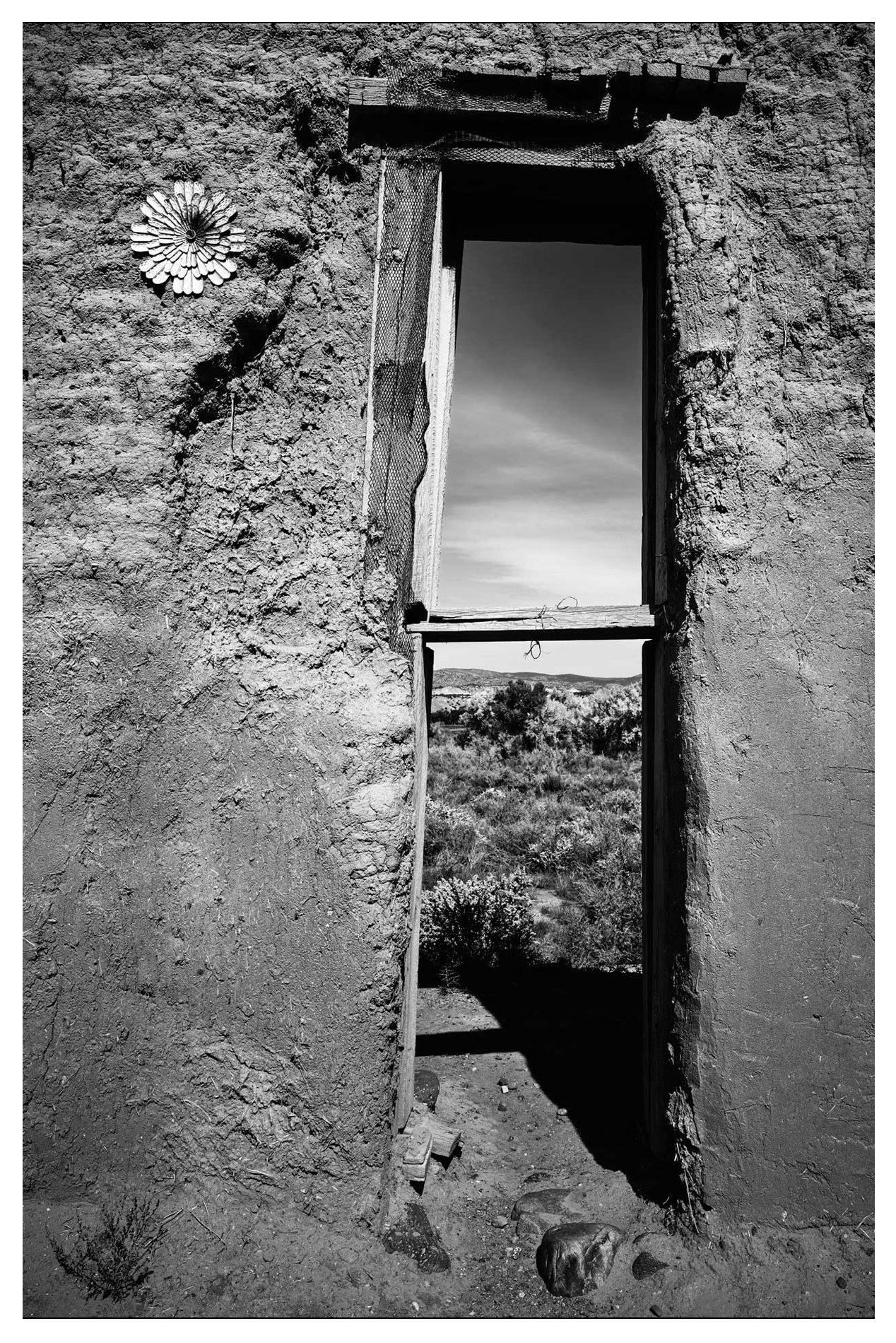
I’m drawn to churches in any condition. This one outside of Los Alamos, New Mexico worked me like a magnet. I stood there and imagined the many partitioners that had looked out that window, at this same view. I like that it’s now memorialized.