
From Photograph to Plate: How Photogravure Prints are Made
The beauty of photogravure lies not only in the finished print but in the complex process that transforms a photograph into an etched printing plate.
Unlike digital printing, photogravure requires a careful combination of image preparation, plate exposure, chemistry, hand inking, and press printing. Each stage demands precision, patience, and experience.
Preparing the Image for Direct-to-Plate Printing
The process begins with the photograph itself. I prefer to capture my images with a Leica M11 Monochrome, a Phase One XT for field work, and the Phase One XF for studio shooting.
The digital image is first prepared as a high-resolution grayscale file. Because photogravure reproduces tone differently than digital printing, a custom tonal curve is applied to ensure the highlights, midtones, and shadows will print correctly.
The image is then printed directly onto the plate using a specialized printing system designed for photogravure workflows. This step replaces the older transparency methods historically used in photogravure printing, so the tonal pattern is on the plate itself rather than on a transparency.
UV Exposure and Image Hardening
Once the image has been transferred to the plate, it is placed under a UV light source for a calibrated time.
Ultraviolet light hardens the clear polymer areas of the plate. Areas where the image modulates the exposure retain a carefully controlled relief structure. This relief structure will ultimately determine how much ink each part of the plate can hold, which directly influences the tonal depth of the final print.
Developing the Plate
After exposure, the plate must be developed through a washout process. The plate is placed image-side up in water or a specialized wash solution. Gentle agitation and light brushing remove the unexposed polymer, revealing the image structure beneath.
This stage requires careful judgment. Over-washing can erode fine detail, while insufficient development may block highlights.
Once the image relief is fully defined, the plate is rinsed thoroughly and excess water is blotted from the surface. The plate must be dried completely before undergoing post-exposure under UV light to fully harden and stabilize the printing surface.
Inking and Wiping the Plate
With the plate prepared, the next stage is one of the most skill-intensive parts of the photogravure process: inking and wiping.
Intaglio ink is spread across the plate using a card or squeegee, forcing ink into every microscopic recess of the photopolymer-textured surface. Often the ink is loosened slightly with a small amount of modifier to create the ideal texture.
The excess ink is then removed by wiping the surface with tarlatan cloth in small circular motions. The final refinement step is done with cleaner cloth or hand‑wiping to control the plate tone, leaving ink only in the recessed image areas and any intentional tone.
This step determines the final tonal balance of the image. Too much wiping can weaken shadows, while insufficient wiping may muddy highlights. Experienced printmakers constantly evaluate the plate under raking light and tweak to ensure desired tonal accuracy.
Paper Preparation and Press Printing
Fine art printing papers used for photogravure must be carefully prepared, which typically involves soaking the paper in water and then blotting to a slightly damp condition. Consistency is key as this moisture allows the paper fibers to be pushed into the plate’s recesses during printing.
To set up the press, the inked photopolymer plate is placed face up on the press bed. The dampened paper is laid over the plate with the desired registration and covered with protective press felts.
The entire stack is then run through an intaglio printing press under high pressure, also referred to as intaglio pressure. Comparatively, this pressure is often a bit lighter than a deep copper etching but does depend on the specific print system being used. The key is to ensure smooth, even distribution of the ink.
The Final Print Reveal
This moment—often called “pulling the print”—reveals the final image. Once the press cycle is complete, the paper is carefully lifted from the plate by peeling the paper, beginning at one corner in a steady motion. The damp print is then dried flat under boards or in a drying system to ensure stability and permanence.
To create additional prints from the same plate, the plate must be re-inked and wiped again, repeating the process for every individual print impression. Because photogravure is a physical, hand-crafted printing process, no two prints created from the same plate will be exactly the same. This is why photogravure fine art prints are often numbered, limited edition pieces.
Why Photogravure Requires Exceptional Skill
Every stage of photogravure demands technical knowledge and manual precision to ensure the final pull will reveal the desired image. Unlike automated printing systems, photogravure requires constant assessment and judgment of the artist. The discretion of the printmaker determines exactly how the photograph will translate to print:
How much ink is applied to the plate
How damp the paper is to accept the ink
How much ink is wiped away to create the desired tonal depth
How much pressure is applied during the intaglio printing process to create the impression
How much care is taken when pulling the print
Photogravure remains one of the most respected and technically demanding forms of fine art printmaking. Unlike digital printing, photogravures are individually hand-crafted, which requires time, skill, and specialized materials. The result is a collectible fine art print with exceptional tonal richness and craftsmanship.
Collecting Photogravure Fine Art Prints
For collectors, photogravure prints represent one of the most refined forms of fine art photography printing. Because each print is individually created using the traditional intaglio print process, photogravures are limited edition, signed photography prints rather than mass-produced prints.
Collectors value photogravure for its exceptional tonal depth in black and white photography, a classic style for collectors. The handcrafted photography prints use archival materials designed to last for generations, creating a collection of heirlooms to be passed down.
These qualities make photogravure prints highly desirable for collectors seeking museum-quality photography prints or heirloom artwork. If you are interested in owning one, please explore available pieces in my online photogravure print collection or schedule an in-person visit to my downtown Denver gallery.
Featured Photogravure Print
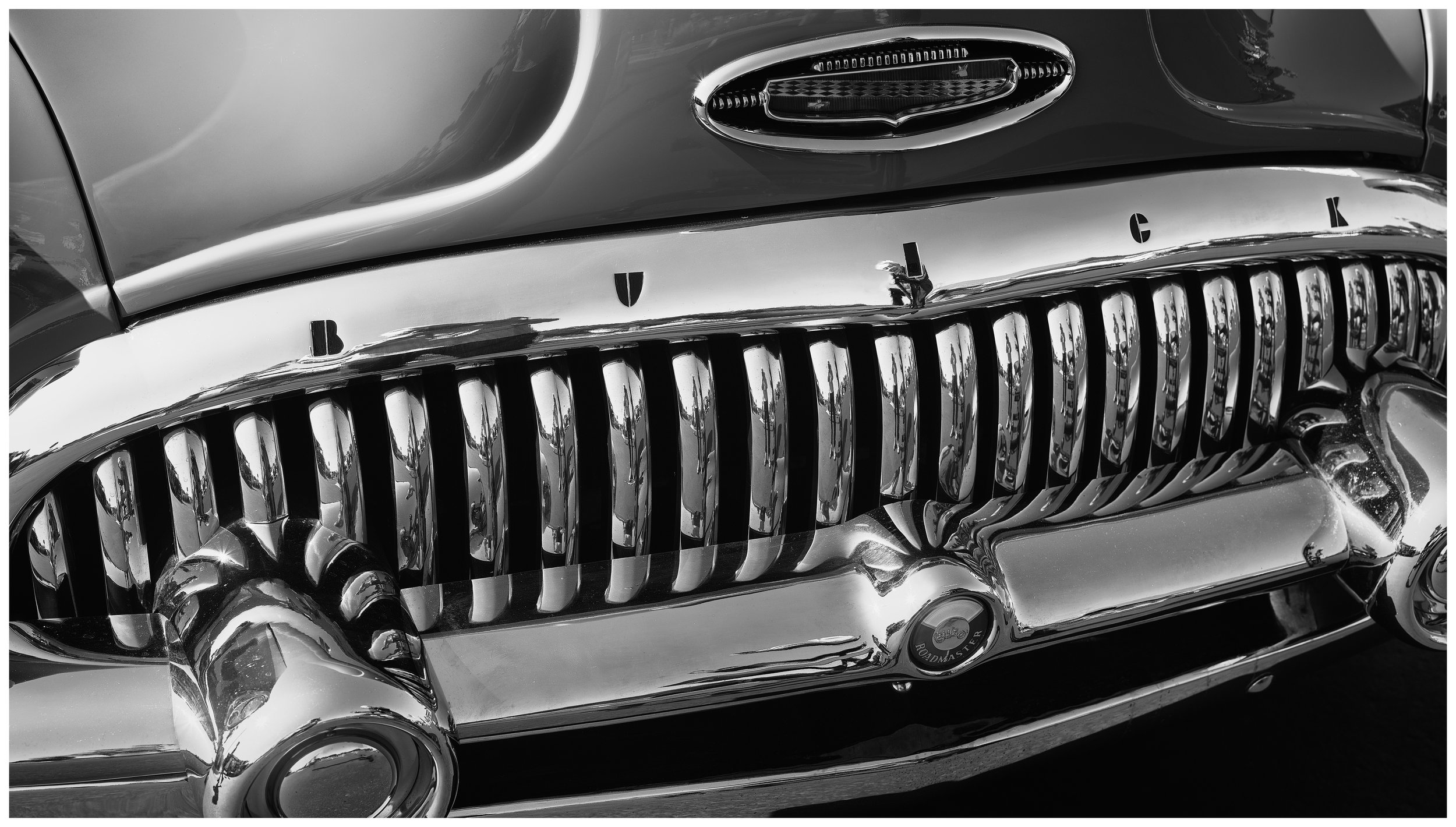
Owned by a friend of mine, the grill of this Buick made for a great monochromatic image. Vintage cars are a bit of an obsession for me.
from $500